A Family's Guide to Caring for Aging Parents at Home | Green Park
A Family's Guide to Caring for Aging Parents at Home
Caring for an aging parent is one of the most loving and one of the most challenging things a family can take on. Whether you are just beginning to help out or you have been managing your parent's care for a while, this guide is here to help. Caring for aging parents at home means balancing their safety, their independence, and their wishes, while also looking after yourself, and it works best with a plan, honest conversations, and the right support. Here is a practical guide to help your family navigate it with more confidence and less stress.
That is the short version. Below we walk through how to start, how to keep your parent safe at home, how to have the hard conversations, how to share the load, and how to avoid caregiver burnout, along with when to bring in extra help. If you would like to talk through your family's situation, we are always glad to help during a free consultation.
Start by understanding what your parent needs
Before making plans, it helps to get an honest picture of how your parent is really doing. Needs usually fall into a few areas:
Daily living, can they bathe, dress, cook, and keep the home up safely?
Health, are they managing medications, appointments, and any conditions well?
Safety, are falls, wandering, or accidents a risk?
Social and emotional, are they connected and engaged, or lonely and withdrawn?
Spend time observing during visits, and talk with your parent about how they feel they are coping. The goal is not to take over, but to understand where support would genuinely help, so you can focus your energy where it matters most.
Make the home safe
Most older adults want to stay in their own home, and a few practical changes make that far safer:
Reduce fall risks. Remove loose rugs, clear clutter from walkways, and make sure rooms are well lit, especially the path to the bathroom at night.
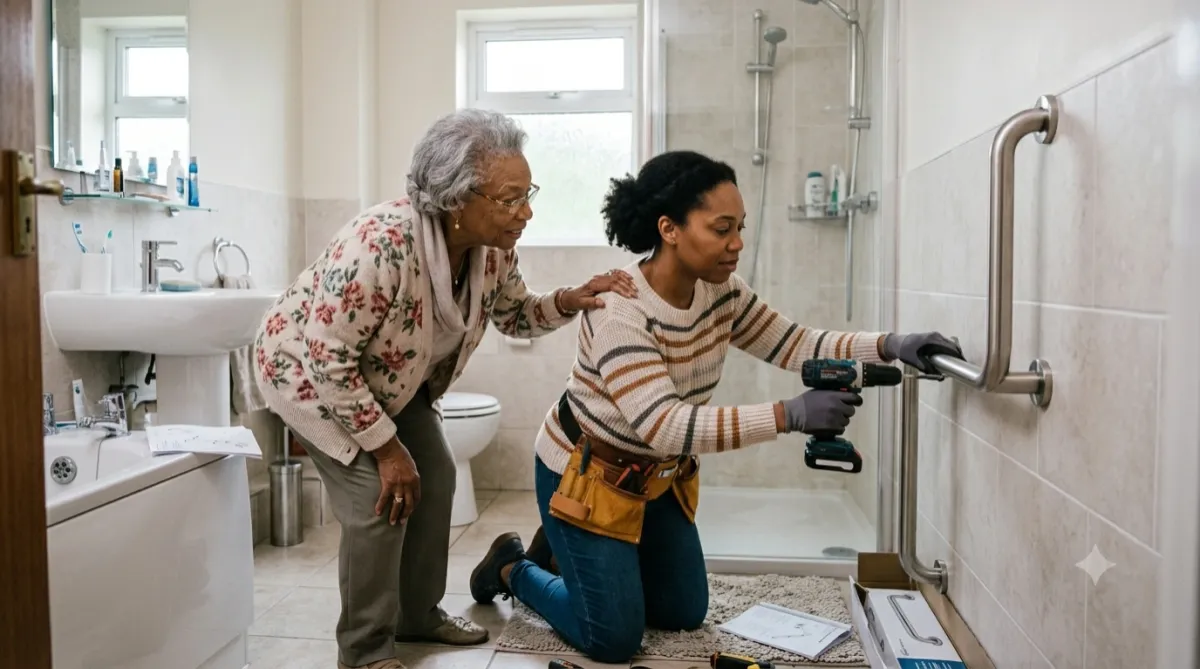
Make the bathroom safer. Grab bars near the toilet and in the shower, a non-slip mat, and a shower seat can prevent the falls that happen most often here.
Keep essentials within reach. Arrange frequently used items so there is no need for risky reaching or climbing.
Improve lighting. Good lighting throughout the home, and night lights along key routes, reduces accidents.
Consider simple aids. A medical alert device, a pill organizer, and a clearly posted list of emergency contacts all add security.
These changes are inexpensive and make a real difference in keeping your parent safe and independent at home.
Have the honest conversations
Some of the hardest parts of caring for aging parents are the conversations, about accepting help, about driving, about finances, about the future. A few principles make them easier:
Start early, before a crisis. It is far better to talk about these things calmly and in advance than in the middle of an emergency.
Listen more than you talk. Ask your parent what they want and how they feel, rather than arriving with decisions already made.
Respect their independence. Frame support as a way to help them stay in control and in their own home, not as taking over.
Involve them in decisions. People accept changes far more readily when they have a say in them.
Be patient. These conversations often happen over time, not in one sitting. That is normal.
Approaching these talks with empathy and patience keeps trust intact, which makes everything else easier.
Share the load with family
Caring for a parent should not fall on one person, though it often does. If you have siblings or other family, talk openly about sharing responsibilities:
Divide tasks by strength and availability. One person might handle finances, another appointments, another daily check-ins.
Communicate regularly. Keep everyone informed so no one feels left out or overburdened.
Be honest about what you can each do. Distance, jobs, and family situations differ, and that is okay. What matters is a fair, workable split.
Accept that it will not be perfectly equal. Often one person carries more. Recognizing and supporting that person matters.
If family is limited or far away, that is exactly where professional support fills the gap, so the responsibility does not rest entirely on one set of shoulders.
Look after yourself, too
This is the part family caregivers most often neglect, and it is one of the most important. Caring for a parent while managing your own life, work, and family is demanding, and burnout is real. It shows up as exhaustion, irritability, guilt, isolation, and your own health slipping.
You cannot pour from an empty cup. Looking after yourself is not selfish, it is what makes it possible to keep caring well. That means taking breaks, keeping some of your own life and relationships, asking for help before you are overwhelmed, and letting go of the idea that you have to do everything perfectly. A rested, supported caregiver provides far better care than an exhausted one.
If you are feeling worn down, that is not a failure. It is a sign you have been carrying a great deal, and that bringing in some support would help both you and your parent.
Know when to bring in extra help
Many families reach a point where love and effort are not enough on their own, when a parent's needs outgrow what the family can safely manage. Signs it may be time to bring in professional home care include:
Your parent needs more help than the family can provide, especially with personal care or safety.
You or another family caregiver is exhausted or unable to keep up.
Your parent is often alone and would benefit from company and a watchful presence.
Safety concerns, like falls or missed medications, are increasing.
You worry constantly when you are not there.
Bringing in home care is not giving up. It is making sure your parent is safe and well cared for, while letting you return to being their son or daughter rather than their full-time caregiver. Home care can be as little as a few hours a week or as much as around-the-clock support, and it works alongside the care your family provides.
How home care supports your family
Professional home care fills the gaps so your parent gets everything they need and your family is not stretched too thin. A caregiver can help with personal care, meals, medication reminders, safety, and companionship, and the support flexes as your parent's needs change. For families juggling jobs, children, and distance, it can be the difference between constant worry and real peace of mind, and it lets your parent stay exactly where they want to be: at home.
What if you live far from your parent?
Many adult children are caring for a parent from another town, another state, or even across the country, and long-distance caregiving brings its own worries. You cannot drop by to check in, and every phone call can leave you wondering how your parent is really doing. A few things help:
Set up regular check-ins. A predictable schedule of calls or video chats helps you stay connected and notice changes over time.
Build a local support network. Neighbors, friends, or nearby relatives who can look in occasionally are invaluable, as is knowing who to call in an emergency.
Use technology thoughtfully. Medical alert devices, simple video calling, and medication reminders can bridge some of the distance.
Keep good records. Have your parent's medications, doctors, and key contacts documented and accessible, so you can act quickly if needed.
Lean on professional home care. This is often the single most reassuring step for long-distance families. A dependable caregiver visiting regularly means someone trustworthy is with your parent, keeping them safe and keeping you informed, even when you cannot be there.
For families spread out by distance and busy lives, professional home care turns constant worry into real peace of mind. You know your parent has company, help, and a watchful presence, and that someone will alert you if anything changes.
Towns and Counties We Serve
We provide home care to families across New Jersey, including Newark, Jersey City, Elizabeth, Montclair, Fort Lee, Englewood, Clifton, and the surrounding communities. Our service area covers seven counties: Essex, Hudson, Bergen, Union, Morris, Passaic, and Middlesex.
Wherever you are in the area, we can help your family care for an aging parent at home, with support built around your parent and your family. Local, dependable care means help that is nearby and easy to reach whenever you need it.
Frequently asked questions
How do I start caring for an aging parent at home? Begin by understanding what your parent needs across daily living, health, safety, and social connection. Observe during visits, talk with your parent about how they are coping, make the home safer, and plan how the family will share the load. Bring in professional support where the needs are beyond what the family can safely manage.
How can I keep my aging parent safe at home? Reduce fall risks by removing loose rugs and clutter and improving lighting, make the bathroom safer with grab bars and non-slip mats, keep essentials within reach, and consider simple aids like a medical alert device and a pill organizer. These changes are inexpensive and make a real difference.
How do I talk to my parent about accepting help? Start early before a crisis, listen more than you talk, respect their independence, and involve them in decisions. Frame support as a way to help them stay in their own home and in control, not as taking over. Be patient, as these conversations often happen over time.
How do I avoid caregiver burnout? Take breaks, keep some of your own life and relationships, ask for help before you are overwhelmed, and let go of doing everything perfectly. Respite care and professional home care can give you regular breaks. A rested caregiver provides far better care than an exhausted one.
When should we bring in professional home care? Consider it when your parent needs more help than the family can safely provide, when a family caregiver is exhausted, when your parent is often alone, when safety concerns are increasing, or when you worry constantly. Home care ranges from a few hours a week to around-the-clock support and works alongside family care.
What areas do you serve? We serve families across New Jersey, including Newark, Jersey City, Elizabeth, Montclair, Fort Lee, Englewood, and Clifton, covering Essex, Hudson, Bergen, Union, Morris, Passaic, and Middlesex counties.
Caring for a parent? You do not have to do it alone.
Caring for an aging parent is an act of love, and it is a lot to carry. Whatever stage you are at, the right support can ease the load and help your parent live safely and happily at home. We are here to help your family however we can.
Request a Free Consultation and we will help you find the right support for your parent and your family.
