Dementia Care at Home in Montclair | Green Park
Signs It May Be Time for Alzheimer's and Dementia Care at Home in Montclair
Watching a parent or spouse change because of memory loss is one of the hardest things a family goes through. If you are wondering whether it is time to bring in help, the clearest signs are usually practical ones: missed medications, trouble with everyday tasks like cooking or bathing, getting lost or confused in familiar places, changes in mood or behavior, and safety scares around the home. When these start adding up, dementia care at home in Montclair can give your loved one safe, patient support in the place they know best, while giving your family real relief.
That is the short answer. Below we walk through the specific signs to watch for, what memory care at home actually looks like day to day, why staying home often helps people with dementia, and how to take the first step when you are not quite sure. If you want the full picture of our memory support, you can also read about our Alzheimer's and dementia care service.
What is dementia care at home?
Dementia care at home is non-medical support provided in the home for someone living with Alzheimer's disease or another form of dementia. It is not nursing or therapy. Instead, it is patient, hands-on help with daily life, delivered in a way that fits how memory loss actually affects a person: gentle reminders, steady routines, help with tasks that have become confusing or unsafe, and a calm, familiar presence throughout the day.
The goal is simple. We help your loved one keep as much of their normal life as possible, safely, in the home they know, while taking the daily pressure off the family members who have been carrying it. A caregiver who understands dementia does not just complete tasks. They adjust to the person's pace, avoid the things that cause frustration, and bring a reassuring calm that makes the whole day go more smoothly.
What are the signs it may be time for memory care at home?
Every person is different, and dementia does not follow a strict schedule. But when families reach out to us, it is usually because several of these signs have started showing up together:
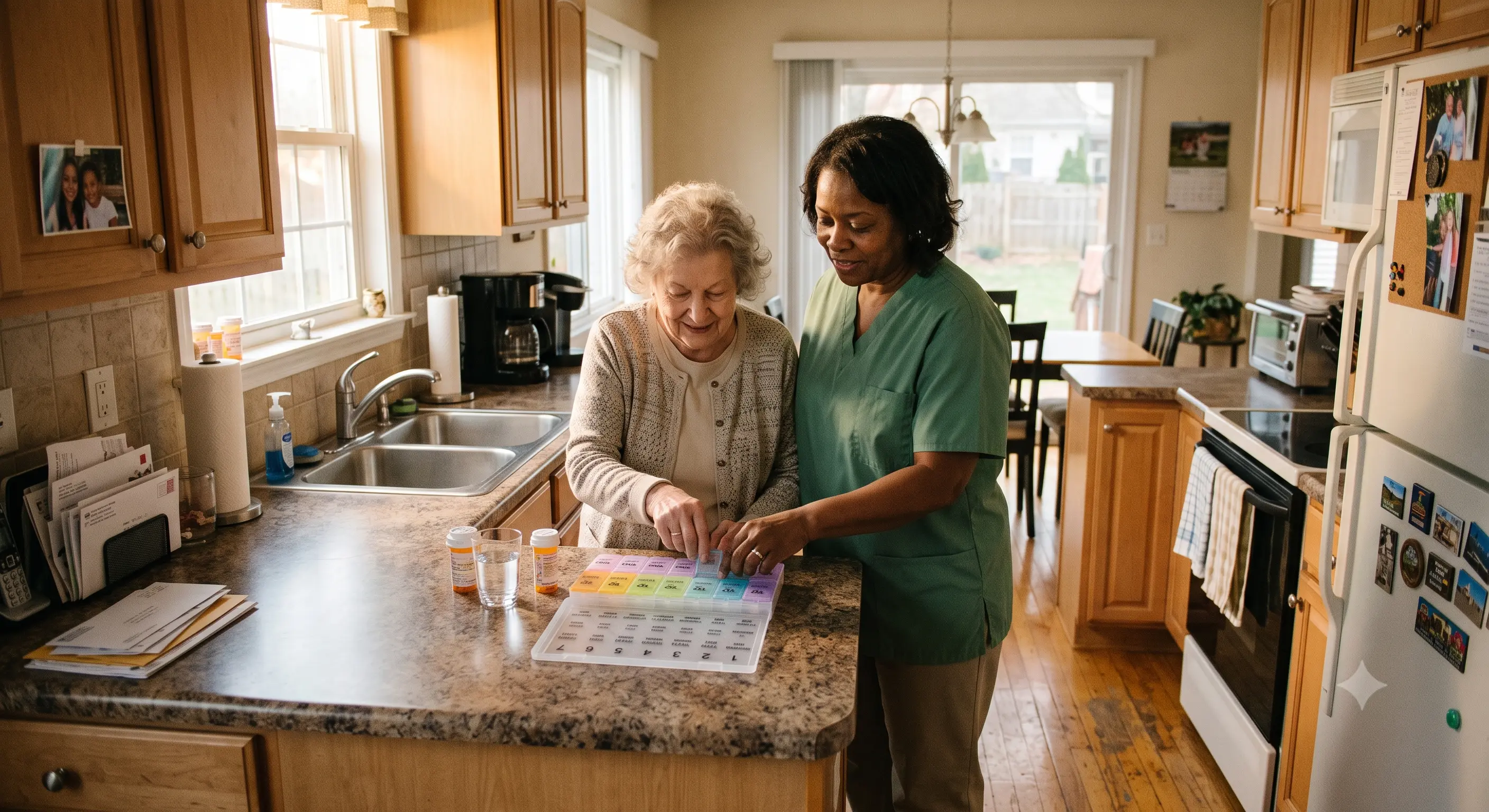
Missed or muddled medications. Pills are skipped, doubled, or taken at the wrong time. This is often one of the first and most serious warning signs.
Trouble with everyday tasks. Cooking, bathing, dressing, or managing the mail and bills becomes confusing or gets abandoned.
Getting lost or disoriented. Confusion about where they are, what day it is, or how to get home from a familiar place.
Safety scares. Leaving the stove on, wandering outside, forgetting to lock doors, or small kitchen accidents.
Changes in mood or behavior. New anxiety, agitation, suspicion, or withdrawal, especially later in the day.
Poor eating or a decline in hygiene. Weight loss, spoiled food in the fridge, or a noticeable drop in grooming and cleanliness.
Caregiver exhaustion. When the family member helping is worn down, losing sleep, or unable to keep up, that is a sign too, and an important one.
You do not need to wait until several of these become a crisis. In fact, bringing in support earlier, while routines can still be gently established, often makes the whole journey easier for everyone.
Why does staying at home help people with dementia?
For many people living with memory loss, familiar surroundings are steadying. The home holds decades of memory in its layout, its light, its routines, and the objects in it. A person who feels lost in a new place will often feel far more settled in their own living room, their own kitchen, their own bed.
Staying home keeps the daily rhythm your loved one already knows: waking in the same room, the same chair by the window, the same short walk to the kitchen. These small anchors reduce confusion and anxiety, which are two of the hardest parts of dementia for families to manage. Change of place can be disorienting for someone with memory loss, so keeping the environment stable is often a real comfort.
Home care also means one-to-one attention. Rather than sharing staff with many other residents, your loved one has a caregiver focused on them, learning their preferences, their history, and the little things that keep them calm. That kind of personal, patient attention is hard to match anywhere else.
What does a dementia caregiver help with day to day?
We build support around the person and how their memory loss affects them, not around a fixed checklist. Day to day, that support often includes:
Gentle routines. Keeping the day predictable, since routine lowers confusion and anxiety for someone with dementia.
Medication reminders. Timely, patient prompts so prescribed medications are taken correctly and on schedule.
Help with daily tasks. Support with bathing, dressing, grooming, and meals, handled in a way that protects dignity and avoids frustration.
Safety at home. A watchful, calm presence that reduces the risks of wandering, falls, and kitchen accidents.
Meals and hydration. Preparing familiar, appealing meals and making sure your loved one is eating and drinking well.
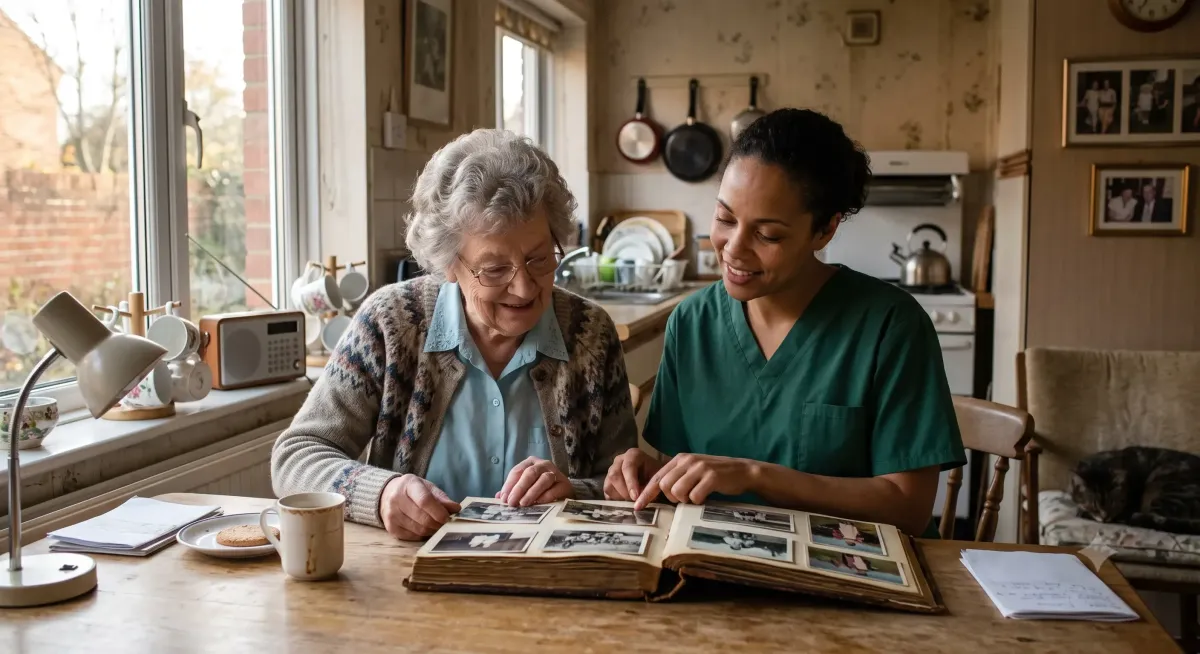
Meaningful company. Simple activities, conversation, music, looking at old photos, and a friendly presence that eases loneliness and lifts the mood.
We also keep families informed. If we notice changes, more confusion than usual, less appetite, new agitation, we let you know, so the family and any medical providers can respond early.
How do you handle difficult days?
Dementia has hard days, and families worry most about the moments of agitation, confusion, or resistance. Experienced dementia caregivers do not meet those moments with force or argument. They stay calm, redirect gently, and adjust the environment, quieter surroundings, a familiar object, a change of activity, a reassuring tone. Often the difference between a difficult afternoon and a peaceful one is simply having someone present who knows not to rush, correct, or overwhelm.
This is also where consistency matters. When the same caregivers return, your loved one builds familiarity and trust, and that relationship itself becomes calming over time.
Caring for the family, too
Dementia care is never only about the person with memory loss. It is also about the husband, wife, son, or daughter who has been quietly holding everything together, often for a long time and often while exhausted.
If you are the family caregiver, bringing in help is not giving up. It is making sure your loved one is safe and well cared for while you get the rest you need to keep going. Many families pair memory support with respite care so the main caregiver can step away and recharge without worry. And when memory loss reaches the point where someone should not be alone at any hour, our 24-hour and live-in care provides a steady, familiar presence day and night.
If your loved one is also recovering from a hospital or rehab stay alongside their memory changes, we can combine that recovery support with dementia care, so both needs are handled together by caregivers who already know them.
What if my loved one does not want help?
This is one of the most common worries families share with us, and it is completely normal. Many people living with memory loss resist help at first, sometimes because they do not recognize how much they are struggling, and sometimes because accepting care feels like losing independence. Pushing too hard usually backfires.
A gentler approach tends to work better. It often helps to introduce a caregiver as a friend or a helper around the house rather than as care, and to start with short visits built around something pleasant, a shared meal, a walk, a bit of company, before adding hands-on tasks. Consistency does the rest: as the same caregiver returns and becomes familiar, trust grows, and what felt like an intrusion starts to feel like a welcome part of the day.
We are used to easing into these situations at a pace that respects your loved one. During a free consultation, we can talk through the personality and history of the person you are caring for and plan an introduction that gives the best chance of a warm start.
Towns and Counties We Serve
We provide dementia and Alzheimer's care at home to families in Montclair and across New Jersey, including Livingston, West Orange, Maplewood, Verona, Glen Ridge, Cedar Grove, and the surrounding towns. Our service area covers seven counties: Essex, Hudson, Bergen, Union, Morris, Passaic, and Middlesex.
Wherever you are in the area, we can talk through the kind of memory support your loved one needs and arrange care close to home. Local, familiar caregivers matter even more with dementia, because consistency and trust are part of the care itself.
Frequently asked questions
What is dementia care at home? Dementia care at home is non-medical support for someone living with Alzheimer's or another form of dementia, provided in their own home. It includes gentle daily routines, medication reminders, help with bathing, dressing, and meals, safety support, and patient companionship. It is not nursing or therapy. It is the everyday, hands-on care that helps someone with memory loss live safely and comfortably at home.
How do I know it is time to get help? Common signs include missed or muddled medications, trouble with everyday tasks like cooking and bathing, getting lost or confused, safety scares such as leaving the stove on or wandering, changes in mood or behavior, and a decline in eating or hygiene. Caregiver exhaustion is a sign too. When several of these appear together, it is usually time to bring in support.
Is it better for someone with dementia to stay at home? For many people, yes. Familiar surroundings and routines reduce the confusion and anxiety that come with dementia, and home care offers one-to-one attention that is hard to match elsewhere. Staying in a known environment often keeps a person calmer and more settled.
Can you care for someone with advanced dementia at home? Often, yes. As needs grow, care can increase to longer hours or around-the-clock support with our 24-hour and live-in care, so your loved one can remain at home with a steady, familiar presence. During a free consultation, we help you understand what level of support fits your loved one's stage.
Will it be the same caregiver each time? We aim for consistency wherever possible, because familiar caregivers build trust and reduce anxiety for someone with memory loss. That relationship becomes part of what keeps your loved one calm.
What areas do you serve? We serve Montclair and families across New Jersey, including Livingston, West Orange, Maplewood, Verona, Glen Ridge, and Cedar Grove, covering Essex, Hudson, Bergen, Union, Morris, Passaic, and Middlesex counties.
How do we get started? Request a free consultation. We will talk through what you are seeing, answer your questions, and help you put the right memory support in place, with no pressure and no obligation.
Ready to talk about care for your loved one?
Noticing these changes in someone you love is frightening, and deciding what to do next can feel overwhelming. You do not have to work it out alone. We are here to help your loved one stay safe and comfortable at home, with patient care built around who they are.
Request a Free Consultation and we will help you find the right support for your family.
