Home Care After Surgery in Livingston | Green Park
Home Care After Surgery in Livingston: A Family Recovery Guide
Recovering from surgery is not just about the operation. It is about the weeks at home afterward, when your loved one is sore, tired, and not yet steady on their feet. Home care after surgery in Livingston gives your family non-medical support during that recovery: help with bathing, dressing, meals, moving around safely, and medication reminders, so your loved one can heal at home without the household falling on one person's shoulders. It is practical, everyday help at exactly the time it is needed most.
That is the short version. Below we walk through what recovery at home really involves, how to prepare before the surgery date, what a caregiver helps with day to day, and how to keep the first weeks safe and calm. If you want the full picture of our recovery support, you can also read about our post-hospital and rehab care service.
What is home care after surgery?
Home care after surgery is non-medical support provided in the home while someone recovers from an operation. It is not nursing and it is not therapy. Instead, it is the hands-on, day-to-day help that makes healing at home realistic: assistance getting around safely, preparing meals, keeping the home tidy and clear, reminders to take medications on time, respectful help with personal care, and a caring presence so your loved one is not managing recovery alone.
A surgical team handles the operation and any follow-up medical care. Home care handles everything that recovery quietly depends on in between: eating well, resting properly, staying safe on unsteady feet, and keeping spirits up while strength returns. For many families, that everyday support is the difference between a smooth recovery and a stressful one.
Why the weeks after surgery are harder than families expect
Most people focus on the surgery itself and assume the recovery will take care of itself. Then their loved one comes home, and the reality sets in. After an operation, even simple things can be genuinely difficult. Standing up from a chair, getting in and out of the shower, bending to reach a low shelf, or carrying a plate across the kitchen can all be painful or unsafe in the early days.
The early recovery period is also when the risk of a setback is highest. A fall, a strained incision, a missed medication, or a few days of poor eating can slow healing or lead to complications. Recovery instructions from the hospital are easier to follow when someone is there to help carry them out, rest when told to rest, take medications on schedule, and avoid the movements that should be avoided.
And there is the emotional side. Recovery can be frustrating and lonely, especially for someone used to being independent. Having steady, friendly support helps your loved one stay patient with the process and reduces the worry that falls on the rest of the family.
How to prepare before the surgery date
One of the advantages of a planned surgery is that you can get ready in advance. A little preparation makes the return home far smoother. Here is what helps most:
Arrange care before the surgery. Line up home care ahead of time so support is in place the day your loved one comes home, with no scramble during a stressful moment.
Set up a recovery space. Choose a comfortable spot on the main floor if stairs will be hard, with everything needed close at hand: water, medications, phone, remote, and a few essentials within easy reach.
Clear the paths. Remove loose rugs, cords, and clutter from the routes your loved one will use most, especially the path to the bathroom.
Stock up ahead of time. Have easy meals, groceries, and any supplies ready, so no one has to run out during the first days.
Understand the recovery instructions. Know what your loved one can and cannot do at first, how long that is likely to last, and what warning signs to watch for.
We help families think all of this through during a free consultation, so you walk into the recovery period prepared rather than reacting.
What does a caregiver help with during recovery?
Every surgery and every person is different, so we build support around what your loved one needs rather than a fixed list. After an operation, that support often includes:
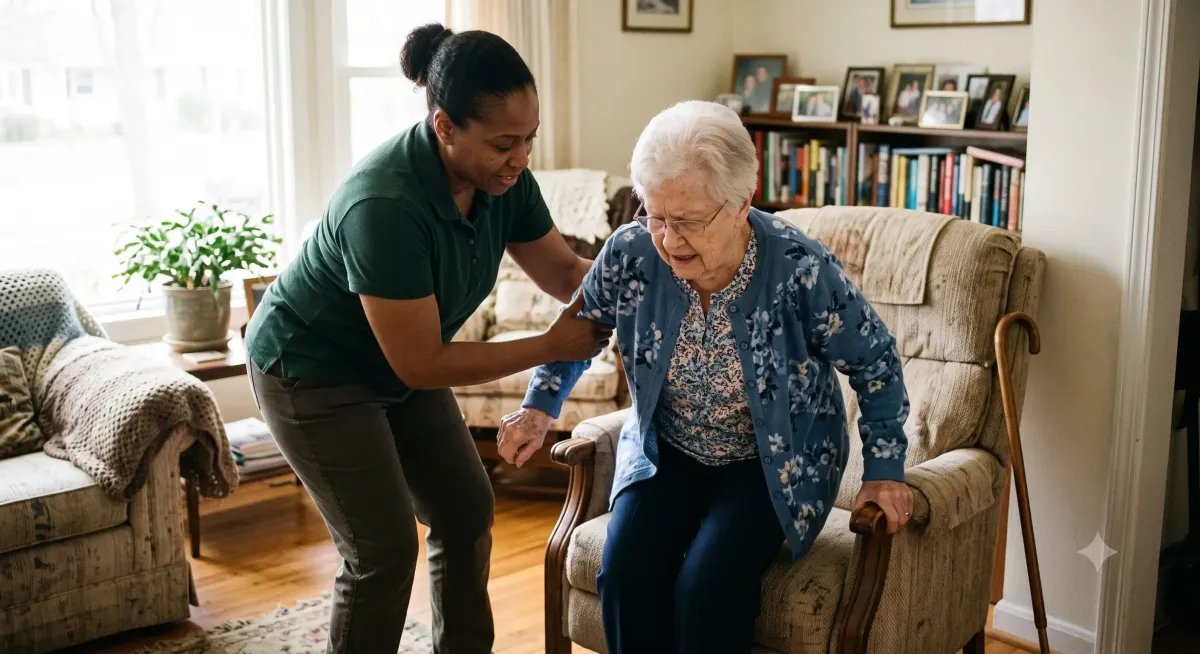
Getting around safely. A steady hand with walking, standing, and moving from bed to chair, which lowers the risk of falls when your loved one is weak or off balance.
Personal care. Respectful help with bathing, dressing, and grooming while movement is limited and certain positions are difficult.
Meals and hydration. Preparing meals that support healing and fit any dietary needs, and making sure your loved one eats and drinks enough to recover well.
Medication reminders. Timely prompts so pain medication and any other prescriptions are taken on schedule, which matters most in the first weeks.
Light housekeeping. Keeping the recovery space and walking paths clean, tidy, and safe.
Following the recovery plan. Gentle encouragement to rest when needed and to avoid the movements that should be avoided while healing.
Companionship. A friendly presence and good company, which helps the days pass more easily and keeps your loved one's spirits up.
We also keep families informed. If we notice anything that seems off, more pain than expected, less appetite, or trouble getting around, we let you know, so it can be looked into early.
How much help will my loved one need?
It depends on the surgery and the person. Some recoveries need only a few hours of help a day to cover meals, personal care, and safety. Others, especially in the first week or two, benefit from longer support before tapering down as strength returns. A good approach is often to start with more help right after the surgery and reduce it as your loved one improves.
During a free consultation, we talk through the type of surgery, the recovery instructions, and your loved one's usual level of independence, then help you plan a schedule that fits. And if the recovery turns out to need more support than expected, we can adjust.
When recovery involves more than one need
Recovery does not always happen in isolation, and two situations come up often.
If your loved one is recovering while also living with memory loss, the two needs have to be handled together with patience and familiar routines. Our Alzheimer's and dementia care support can work alongside recovery care, so both are covered by caregivers who understand them.
And if a family member has been carrying the recovery alone and is wearing down, respite care gives the main caregiver room to rest and recharge. Recovery goes more smoothly for everyone when the person leading it is not exhausted. If the recovery calls for support around the clock, our 24-hour and live-in care can provide a steady presence day and night.
Warning signs to watch for during recovery
Part of a safe recovery is knowing when something needs attention. While a caregiver is not a medical provider, having someone present who can spot changes early and alert the family makes a real difference. These are the kinds of things worth keeping an eye on in the days after surgery:
Increasing pain rather than easing pain. Some discomfort is normal, but pain that grows instead of settling is worth flagging.
Changes around the incision. New redness, swelling, warmth, or drainage should be reported to the medical team promptly.
Fever or feeling unwell. A rising temperature or general sickness can be an early sign of a problem.
Not eating or drinking. A day or two of very poor intake can slow healing and lead to other issues.
Confusion or unusual drowsiness. Especially in older adults, these changes should not be ignored.
Trouble with new medications. Side effects or difficulty keeping to the schedule are worth raising early.
When a caregiver notices any of these, we let the family know right away so the medical team can be contacted if needed. Catching a small problem early is often what keeps it from becoming a bigger one, and it gives families real peace of mind knowing someone attentive is there.
Towns and Counties We Serve
We provide home care after surgery to families in Livingston and across New Jersey, including West Orange, Millburn, Short Hills, Roseland, Montclair, and the surrounding towns. Our service area covers seven counties: Essex, Hudson, Bergen, Union, Morris, Passaic, and Middlesex.
Wherever you are in the area, we can arrange recovery support close to home, on a schedule that fits your family. Local, dependable care means help can start quickly and adjust as your loved one heals.
Frequently asked questions
What is home care after surgery? Home care after surgery is non-medical support provided in the home while someone recovers from an operation. It includes help with moving around safely, bathing and dressing, preparing meals, medication reminders, light housekeeping, and companionship. It is the everyday, hands-on help that makes recovering at home safe and comfortable, and it does not include nursing or therapy.
When should we arrange care for a planned surgery? Ideally before the surgery date. Arranging home care in advance means support is ready the day your loved one comes home, so there is no scramble during a stressful time. It also gives you a chance to prepare the home and plan the right schedule.
How long will my loved one need help after surgery? It varies by surgery and by person. Some need only a few hours a day, while others benefit from longer support in the first week or two before tapering off as strength returns. During a free consultation, we help you plan a schedule that fits and adjust it as recovery progresses.
Is this the same as home health care? No. Home health care usually refers to medical services like skilled nursing or therapy. What we provide is non-medical home care: the practical daily support that helps someone recover safely at home. Many families use both at once, with a medical team handling clinical needs and our caregivers handling everyday support.
Can you help right after discharge? Yes. Many families arrange for care to begin the day their loved one comes home. If you need support quickly, reach out and we will work to arrange it as fast as we can.
What areas do you serve? We serve Livingston and families across New Jersey, including West Orange, Millburn, Short Hills, Roseland, and Montclair, covering Essex, Hudson, Bergen, Union, Morris, Passaic, and Middlesex counties.
How do we get started? Request a free consultation. We will talk through the surgery, the recovery, and the support you are looking for, then help you put the right care in place, with no pressure and no obligation.
Ready to plan a smooth recovery at home?
A surgery is stressful enough without worrying about how the recovery will go at home. We are here to make those weeks calmer and safer, with support built around your loved one and your family, so healing can happen where it is most comfortable.
Request a Free Consultation and we will help you plan the right care for the recovery ahead.
