In-Home Care in Englewood NJ | Green Park Home Care
In-Home Care in Englewood: Companion and Personal Care for Seniors
When an older parent or loved one in Englewood needs a little more help at home, families often are not sure where to start. In-home care in Englewood gives your loved one non-medical support right in their own home, from friendly companionship and help around the house to hands-on personal care like bathing and dressing, so they can stay safe, comfortable, and independent where they are happiest. This guide explains the kinds of in-home care available, how to know what your loved one needs, and how to take the first step.
That is the short version. Below we walk through what in-home care covers, the difference between companion care and personal care, the signs it may be time, and how to choose the right support. If you would like to learn more, you can also read about our companionship care and personal care support.
What is in-home care?
In-home care is non-medical support that helps older adults live safely and comfortably in their own home. It is not nursing or therapy. Instead, it is the everyday, practical help that makes staying at home realistic as needs change: company and conversation, help around the house, preparing meals, reminders to take medications, and hands-on help with personal tasks like bathing and dressing when those become difficult.
The goal is simple. We help your loved one keep their independence and their routine in the home they love, while giving your family peace of mind that someone caring is there. For many older adults in Englewood, staying home is deeply important, and the right support makes it possible for far longer than families often expect.
What is the difference between companion care and personal care?
These are the two most common kinds of in-home care, and understanding the difference helps you choose what your loved one needs.
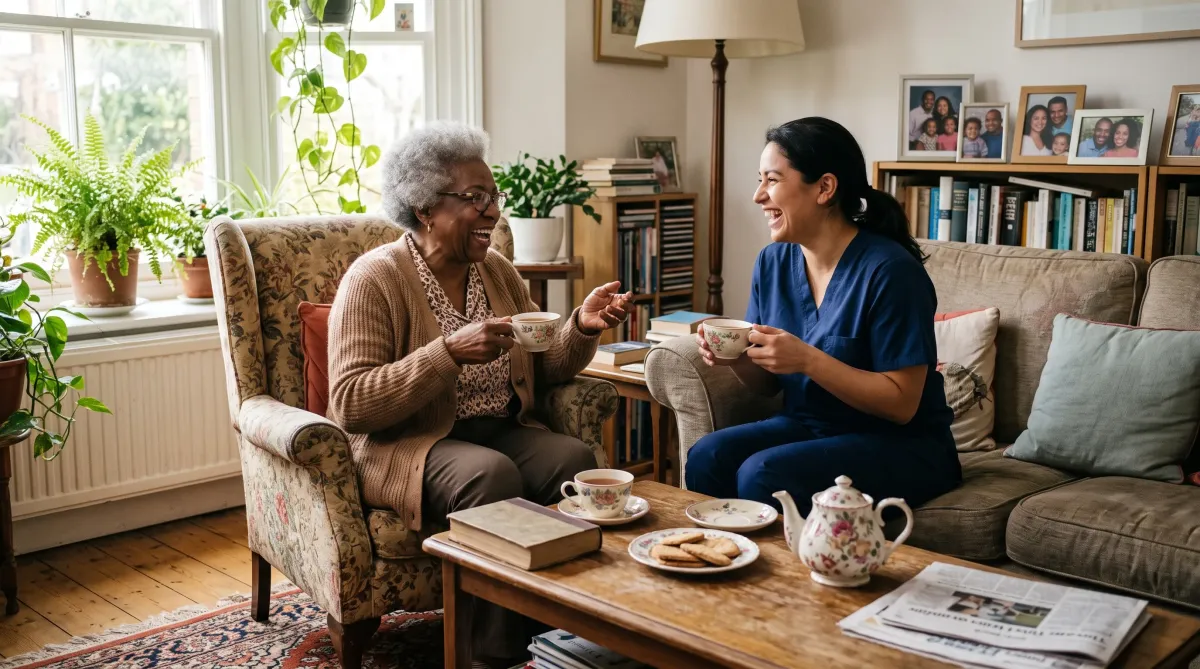
Companion care focuses on company, connection, and help around the house. A companion caregiver spends time with your loved one, shares conversation and activities, helps with errands, light housekeeping, meals, and getting to appointments, and keeps an eye on their wellbeing. It is a wonderful fit for older adults who are largely independent but lonely, or who need a little help and a friendly presence to stay safe and engaged.
Personal care adds hands-on help with the tasks of daily living. A personal care aide assists with bathing, dressing, grooming, using the bathroom, and moving around safely. It is the right fit when your loved one is having real difficulty managing these things on their own.
Many families use a combination, and the same caregiver can often provide both. As needs change, the balance can shift, more companionship at first, more personal care later, so your loved one always has the right level of support.
What does in-home care include?
We build support around your loved one and what would help most. Depending on their needs, that often includes:
Companionship. Conversation, shared activities, and a friendly presence that eases the loneliness many older adults feel.
Help around the house. Light housekeeping, laundry, and keeping living spaces tidy and safe.
Meals. Preparing meals that suit your loved one's tastes and any dietary needs, and making sure they eat and drink well.
Personal care. Respectful, hands-on help with bathing, dressing, and grooming when those become difficult.
Getting around safely. A steady hand with walking and moving through the home to help prevent falls.
Medication reminders. Timely prompts so prescribed medications are taken on schedule.
Errands and appointments. Help getting to the doctor, the pharmacy, or the store, so your loved one stays connected to the world outside.
We also keep families informed about how their loved one is doing, so you always have a clear picture even when you cannot be there.
How do I know my loved one needs help at home?
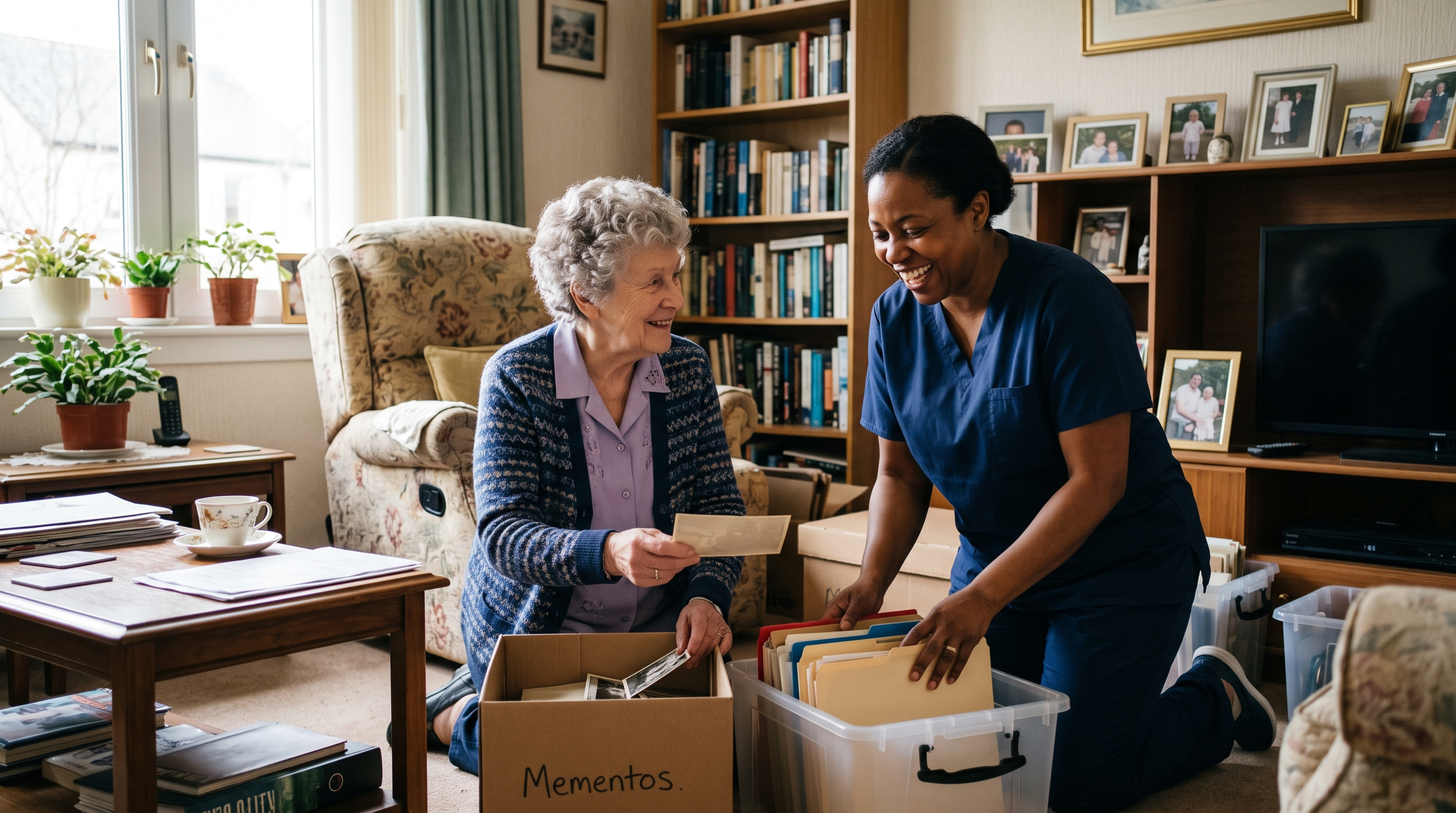
It is not always obvious when an aging parent needs support, especially if they are reluctant to admit it. These are common signs families in Englewood notice:
The house is not being kept up the way it used to be, with clutter, unopened mail, or spoiled food in the fridge.
Meals are being skipped or your loved one is losing weight.
Personal care is slipping, with a noticeable change in grooming, bathing, or clean clothes.
They seem lonely or withdrawn, spending most of the day alone with little contact.
Everyday tasks are harder, like bathing, dressing, or moving safely around the house.
You are worried when you are not there, and find yourself checking in constantly.
Noticing a few of these does not mean your loved one has to leave home. It usually means a little support would help them stay home safely and comfortably. Bringing in help early often prevents the falls, missed meals, and isolation that lead to bigger problems later.
Why staying at home matters for older adults
For most older adults, home is more than a place. It holds their memories, their routines, their independence, and their sense of self. Being able to stay there, surrounded by the familiar, is often deeply tied to their happiness and wellbeing.
In-home care makes that possible by filling in the gaps rather than taking over. Your loved one keeps doing what they can, keeps their routine, and keeps their independence, with support stepping in only where it is needed. Many families find that the right care actually helps their loved one stay more active and engaged than they would be elsewhere, because the care is built entirely around them.
How do you match the right caregiver?
A good match is about more than tasks. When someone is spending time in your loved one's home and life, personality and warmth matter enormously. We take time to understand your loved one, their interests, their history, and their preferences, and to introduce a caregiver who fits, not just whoever is available.
We also aim for consistency, so your loved one sees familiar faces rather than a rotating cast of strangers. Over time, that steady relationship often becomes something your loved one genuinely looks forward to, a trusted presence and a bit of good company in the day.
How do I talk to my parent about accepting help?
For many families, the hardest part is not finding care. It is the conversation. Older adults often resist help because accepting it can feel like losing independence, and pushing too hard usually makes them dig in. A gentler approach works far better.
It helps to frame support as something that keeps them independent rather than something that takes over. A little help with the house and meals is what lets them stay home, not a step toward leaving it. It also helps to start small, perhaps a few hours of companionship, and let your loved one experience the support before expanding it. Introducing a caregiver as a friendly helper rather than as care can ease the first meeting.
Listening matters most of all. Ask what your loved one is finding hard and what they would actually welcome help with, rather than deciding for them. When they feel heard and in control of the decision, they are far more likely to accept support, and often to appreciate it once it begins.
When needs grow beyond everyday support
In-home care is flexible, and it can grow with your loved one. If memory changes appear, our Alzheimer's and dementia care provides patient, familiar support built for memory loss. If your loved one comes home from a hospital or rehab stay, our post-hospital and rehab care can help through the recovery. And if being alone is no longer safe at any hour, our 24-hour and live-in care provides a steady presence day and night. Because it is the same agency, the transition between these is smooth, and often the same caregivers can continue.
Towns and Counties We Serve
We provide in-home care to families in Englewood and across New Jersey, including Fort Lee, Teaneck, Bergenfield, Tenafly, Leonia, Fair Lawn, and the surrounding communities, along with towns throughout the area. Our service area covers seven counties: Bergen, Essex, Hudson, Union, Morris, Passaic, and Middlesex.
Wherever you are in the Englewood area, we can talk through the kind of support your loved one needs and arrange care close to home. Local, dependable care means help that is nearby and easy to reach whenever you need it.
Frequently asked questions
What is in-home care? In-home care is non-medical support that helps older adults live safely and comfortably in their own home. It includes companionship, help around the house, meals, medication reminders, and hands-on personal care such as bathing and dressing. It is not nursing or therapy. It is the everyday, practical help that makes staying at home possible as needs change.
What is the difference between companion care and personal care? Companion care focuses on company, conversation, and help around the house, while personal care adds hands-on help with bathing, dressing, grooming, and moving safely. Many families use a combination, and the same caregiver can often provide both. The balance can shift over time as your loved one's needs change.
How do I know if my loved one needs in-home care? Common signs include a home that is not being kept up, skipped meals or weight loss, a decline in grooming or bathing, loneliness or withdrawal, difficulty with everyday tasks, and worry when you are not there. Noticing a few of these usually means a little support would help your loved one stay home safely.
Is in-home care the same as a nursing home? No. In-home care lets your loved one stay in their own home with support that comes to them, rather than moving into a facility. It is non-medical care built around keeping your loved one independent and comfortable where they are happiest.
Can care increase as my loved one's needs change? Yes. In-home care is flexible. It can start with a few hours of companionship and grow into more hands-on personal care, dementia support, recovery care, or around-the-clock support as needs change, often with the same caregivers.
What areas around Englewood do you serve? We serve Englewood and the surrounding area, including Fort Lee, Teaneck, Bergenfield, Tenafly, and Leonia, along with families across Bergen, Essex, Hudson, Union, Morris, Passaic, and Middlesex counties.
How do we get started? Request a free consultation. We will talk through your loved one's needs, answer your questions, and help you put the right support in place, with no pressure and no obligation.
Ready to help your loved one stay home?
Watching an aging parent need more help is not easy, but keeping them safe and comfortable at home is one of the most caring things a family can do. We are here to make it possible, with warm, dependable support built around your loved one and your family.
Request a Free Consultation and we will help you find the right care for your loved one in Englewood.
