Personal Care at Home in Newark | Green Park Home Care
Personal Care at Home in Newark: Dignified Daily Support for Seniors
When bathing, dressing, or getting around safely becomes difficult for an older loved one in Newark, personal care at home can help them manage with comfort and dignity. Personal care at home in Newark is non-medical support with the everyday tasks of daily living: help with bathing, dressing, grooming, using the bathroom, and moving safely, all provided respectfully in your loved one's own home. It lets them keep their routine and their dignity while getting the hands-on help they need. This guide explains what personal care covers, how it is delivered with respect, and how to know when it is time.
That is the short version. Below we walk through what personal care includes, how caregivers protect dignity, the signs your loved one could use it, and how to get started. If you would like to learn more, you can also read about our personal care service.
What is personal care at home?
Personal care at home is non-medical support with the hands-on tasks of daily living, provided in your loved one's own home. It is not nursing or therapy. Instead, it is respectful, practical help with the personal routines that can become difficult with age, illness, or reduced mobility: bathing and showering, dressing and grooming, using the bathroom, and moving safely around the home.
For many older adults, these are the tasks that become hardest to manage alone, and also the most personal. Good personal care handles them with patience and respect, so your loved one stays clean, comfortable, and confident, without feeling like a burden. It is often the kind of help that makes staying at home possible when daily routines have become a struggle.
What does personal care include?
We build support around your loved one and what they need help with. Personal care often includes:
Bathing and showering. Safe, respectful help with washing, whether that is full assistance or just a steadying hand.
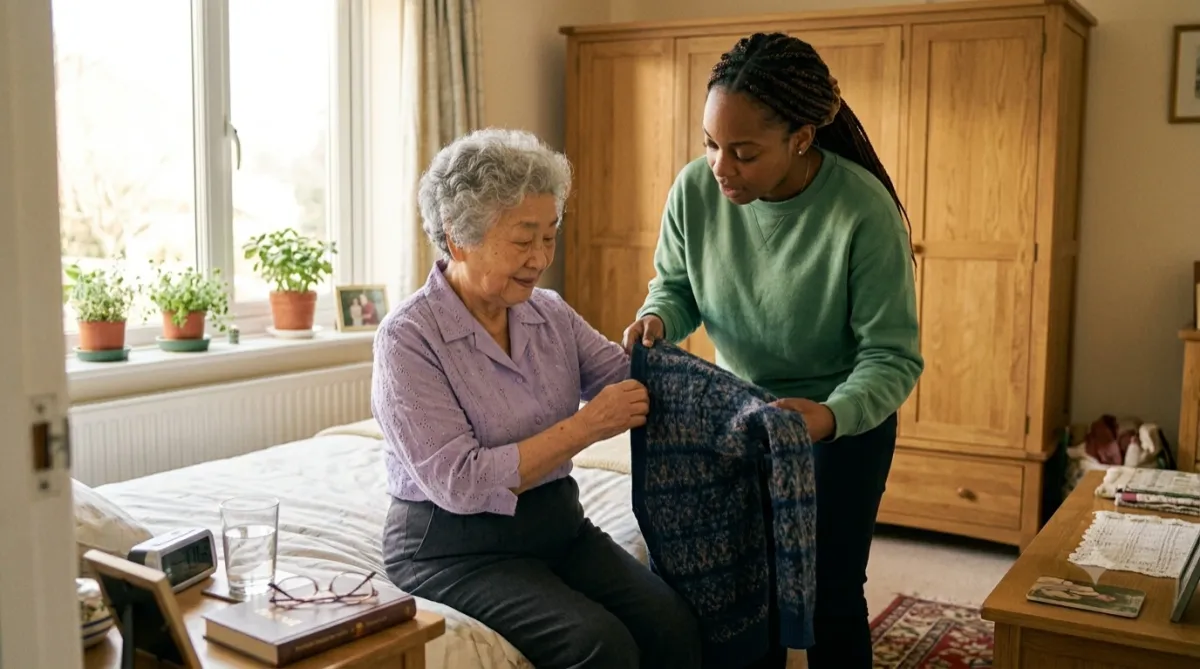
Dressing and grooming. Help getting dressed, with hair, shaving, and looking and feeling put together.
Toileting and continence support. Discreet, dignified help with using the bathroom and staying clean and comfortable.
Mobility and transfers. A steady hand with walking, standing, and moving from bed to chair, reducing the risk of falls.
Skin and comfort care. Helping your loved one stay comfortable and noticing anything that should be brought to the family's attention.
Support with meals and medications. Help eating well and taking prescribed medications on schedule.
Personal care is often combined with companionship and help around the house, so your loved one gets both the hands-on support and the good company that make the day better.
How is personal care delivered with dignity?
This is what families care about most, and rightly so. Accepting help with bathing or dressing can feel hard for an older adult who has always been independent, so how that help is given matters enormously.
Our caregivers are trained to provide personal care in a way that protects dignity at every step. That means going at your loved one's pace, explaining gently, preserving privacy and modesty, and encouraging your loved one to do whatever they still can for themselves. The goal is never to take over, but to support, so your loved one feels cared for rather than handled.
Consistency helps too. When the same caregiver returns regularly, a relationship of trust and comfort builds, and personal care becomes far easier for your loved one to accept. Many families are relieved to see how quickly their loved one grows comfortable once they have a caregiver they know and trust.
What are the signs my loved one could use personal care?
It is not always easy to know when personal care is needed, especially if your loved one is private or reluctant to admit they are struggling. Common signs families in Newark notice include:
A decline in grooming or hygiene, wearing the same clothes, skipping showers, or a change in appearance.
Difficulty or fear around bathing, especially getting in and out of the tub or shower safely.
Unsteadiness or near-falls, particularly in the bathroom or when dressing.
Trouble with buttons, zippers, or shoes, making dressing frustrating or slow.
Signs they are avoiding these tasks because they have become too hard to manage alone.
Noticing a few of these usually means some respectful hands-on help would make daily life safer and more comfortable for your loved one.
How does personal care help the whole family?
When a family member has been helping a parent or spouse with bathing and dressing, it can be physically and emotionally demanding, and sometimes it strains the relationship. A daughter helping her father shower, or a wife lifting her husband, is a lot to carry, and it can change how they relate to each other.
Bringing in a professional caregiver for personal care often lifts that weight. It keeps the family member in the role of son, daughter, or spouse, rather than full-time caregiver, while making sure the hands-on care is done safely and with dignity. Many families find their relationship with their loved one actually improves once the hardest physical tasks are handled by someone else.
When needs grow beyond personal care
Personal care is flexible, and it can grow with your loved one. If they would also benefit from company and help around the house, we can add companionship care with the same caregiver. If memory changes appear, our Alzheimer's and dementia care provides patient support built for memory loss. If your loved one is recovering from a hospital stay, our post-hospital and rehab care can help, and if being alone is no longer safe at any hour, our 24-hour and live-in care provides a steady presence day and night.
How often is personal care provided?
Personal care can be arranged around exactly what your loved one needs, and it varies a lot from family to family. Some need help only at certain moments of the day, such as a caregiver coming in the morning to assist with bathing and dressing, and again in the evening to help get ready for bed. Others need support spread through the day, or eventually around the clock.
Many families start with a visit or two a day for the most difficult tasks, then adjust as they see how it goes. There is no need to commit to a large schedule at the outset. The right amount is whatever keeps your loved one safe, clean, and comfortable, and that can grow gradually as needs change. During a free consultation, we help you figure out a schedule that fits your loved one's routine and your family's needs, and we adjust it whenever it would help.
How do you help a loved one accept personal care?
For many families, the hardest part is not arranging personal care but helping a proud parent accept it. It can feel difficult for someone who has always managed alone to let another person help with bathing or dressing. A gentle, patient approach makes all the difference.
It often helps to frame the support around safety and comfort rather than dependence, letting your loved one know this is about staying safe in the shower or feeling their best each day, not losing their independence. Starting small also helps, perhaps with just a steadying hand at first, before building to more hands-on help as trust grows. And keeping the same caregiver matters enormously, because personal care becomes far easier to accept from someone familiar and trusted.
We are experienced at easing into personal care at a pace that respects your loved one's feelings. During a free consultation, we can talk through their personality and any concerns, and plan an approach that helps them feel comfortable and in control from the very start. Most families are relieved to see how quickly their loved one settles once the right caregiver is in place.
Towns and Counties We Serve
We provide personal care at home to families in Newark and across New Jersey, including the Ironbound, Forest Hill, Weequahic, and nearby communities, as well as East Orange, Irvington, Belleville, and Bloomfield. Our service area covers seven counties: Essex, Hudson, Bergen, Union, Morris, Passaic, and Middlesex.
Wherever you are in the Newark area, we can talk through the kind of support your loved one needs and arrange care close to home. Local, dependable care means help that is nearby and easy to reach whenever you need it.
Frequently asked questions
What is personal care at home? Personal care at home is non-medical support with the hands-on tasks of daily living, provided in your loved one's own home. It includes help with bathing, dressing, grooming, using the bathroom, and moving safely. It is not nursing or therapy. It is respectful, practical help with the personal routines that can become difficult with age or reduced mobility.
How do you protect my loved one's dignity? Our caregivers provide personal care at your loved one's pace, explaining gently, preserving privacy and modesty, and encouraging your loved one to do whatever they still can for themselves. Consistency with the same caregiver builds trust and comfort, which makes personal care far easier to accept.
What are the signs my loved one needs personal care? Common signs include a decline in grooming or hygiene, difficulty or fear around bathing, unsteadiness or near-falls, trouble with buttons or shoes, and avoiding these tasks because they have become too hard. Noticing a few usually means some hands-on help would make daily life safer and more comfortable.
Can personal care be combined with other support? Yes. Personal care is often combined with companionship and help around the house, and it can grow into dementia care, recovery care, or around-the-clock support as needs change, often with the same caregiver.
Is personal care the same as medical care? No. Personal care is non-medical support with daily routines like bathing and dressing. It does not include nursing or therapy, which are medical services provided by a medical team. Many families use both together.
What areas of Newark do you serve? We serve Newark and the surrounding area, including the Ironbound, Forest Hill, Weequahic, East Orange, Irvington, Belleville, and Bloomfield, along with families across Essex, Hudson, Bergen, Union, Morris, Passaic, and Middlesex counties.
How do we get started? Request a free consultation. We will talk through your loved one's needs, answer your questions, and help you put the right support in place, with no pressure and no obligation.
Ready to help your loved one with dignified daily care?
Needing help with bathing or dressing is nothing to be ashamed of, and getting that help should never cost your loved one their dignity. We are here to provide respectful, patient personal care at home in Newark, so your loved one stays comfortable and confident in the place they know best.
Request a Free Consultation and we will help you find the right support for your family.
