Post-Hospital Home Care in Jersey City | Green Park
What to Expect from Post-Hospital Home Care in Jersey City
Coming home after a hospital or rehab stay is a relief, but the first days can feel uncertain. Post-hospital home care in Jersey City gives your loved one steady, non-medical support at home during recovery: help with everyday tasks like bathing, dressing, meals, moving around safely, and medication reminders, so the return home is calmer and safer for everyone. It fills the gap between leaving a facility and getting back to normal life, at a time when a little steady help makes a real difference.
That is the short version. Below we walk through what this kind of care actually looks like day to day, when families tend to need it, how to arrange it, and what to plan for as you prepare the return home. If you want the full picture of our recovery support, you can also read about our post-hospital and rehab care service.
What is post-hospital home care?
Post-hospital home care is non-medical support provided in the home after someone is discharged from a hospital or rehab center. It is not nursing and it is not therapy. Instead, it is the practical, hands-on help that makes recovery at home realistic: assistance getting around the house safely, preparing meals, keeping up with light housekeeping, reminders to take medications on time, respectful help with personal care, and a caring person nearby so no one has to manage the first weeks alone.
Think of it as the everyday support that lets your loved one focus on healing while the household keeps running. A hospital or rehab team handles the medical side of recovery. Home care handles everything else that recovery quietly depends on: eating well, staying safe on your feet, keeping the home in order, and not feeling alone while strength slowly returns.
Families often tell us they did not realize how much these small, ordinary tasks would matter until their loved one was actually home. Standing at the stove long enough to cook, getting safely in and out of the shower, remembering which pills come in the morning and which come at night: these are exactly the things that feel manageable in a facility with staff around, and suddenly feel much harder in a quiet house.
Why the first days home matter so much
The days right after discharge are when families feel the most pressure. Someone who managed fine before a hospital stay may come home tired, unsteady on their feet, and not quite themselves. Simple things become harder: getting to the bathroom, standing long enough to prepare a meal, keeping track of new medications, or even just getting up from a low chair without help.
This is also the window when small problems can turn into real setbacks. A fall in the first week, a missed dose of medication, or a few days of skipped meals can undo the progress made in the hospital and, in some cases, send someone right back where they started. Recovery is not only about what happens in a treatment room. It is about what happens at home in the ordinary hours between appointments, and those hours are where steady support matters most.
Having someone reliable present during this period does two things. It keeps recovery on track by reducing the everyday risks, and it gives the whole family room to breathe. Instead of one relative trying to be nurse, cook, driver, and companion all at once while still holding down a job, the load is shared. That relief is often as valuable as the hands-on help itself.
What does a caregiver actually help with?
Every recovery is different, so we build support around what your loved one needs rather than a fixed checklist. In the weeks after a hospital or rehab stay, that support often includes:
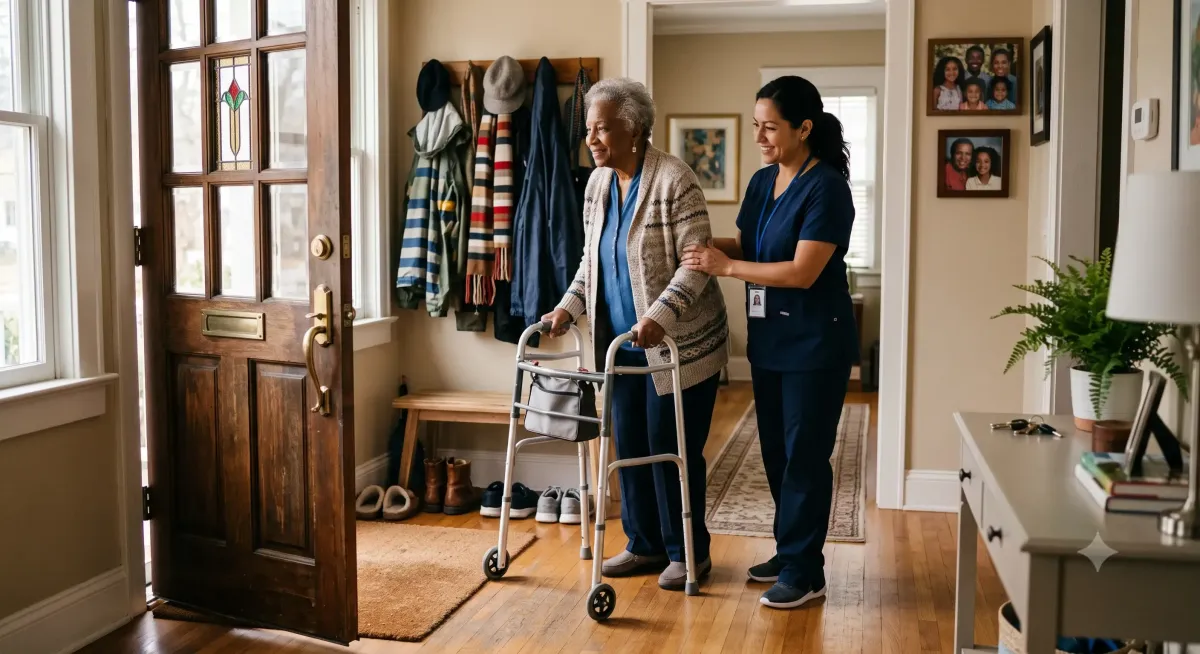
Getting around safely. A steady hand with walking, moving from bed to chair, and getting in and out of the bathroom, which is where many falls happen during recovery.
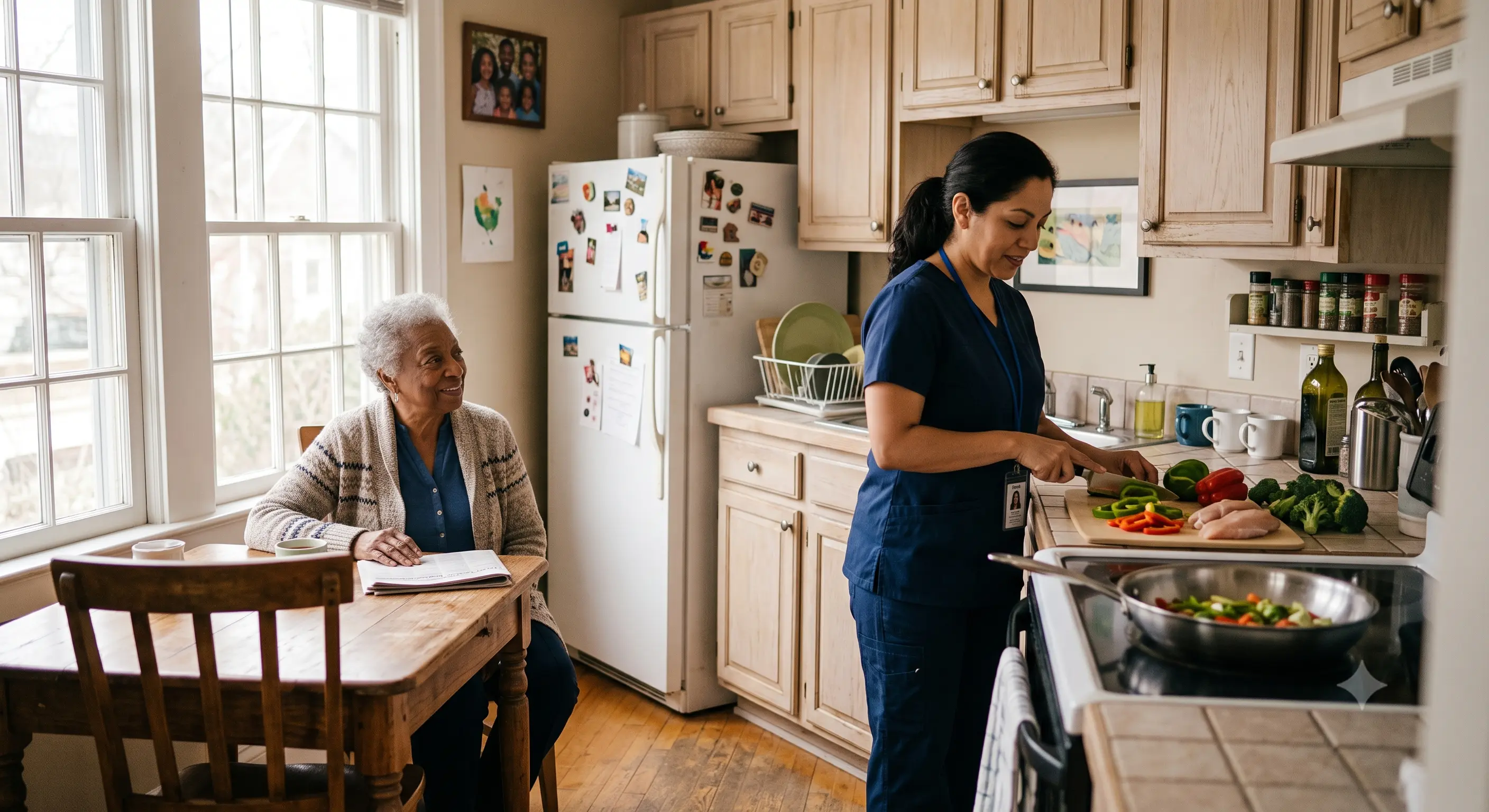
Meals and hydration. Preparing meals that fit any dietary needs, and making sure your loved one is actually eating and drinking enough to heal, not just skipping meals because cooking feels like too much.
Medication reminders. Timely, friendly prompts so prescribed medications are taken on schedule, which matters most in the first weeks when routines are new.
Personal care. Respectful help with bathing, dressing, and grooming while strength and confidence return.
Light housekeeping. Keeping living spaces tidy and walking paths clear, so the home itself stays safe to move around in.
Companionship. A friendly, reassuring presence. Recovery can be lonely and discouraging, and having someone to talk to often lifts a person's spirits more than families expect.
We also keep families in the loop. If we notice your loved one seems more tired than usual, is eating less, or is having more trouble getting around, we let you know, so nothing important slips by unnoticed.
How soon can care start after a hospital discharge?
Often quickly. Many families reach out while their loved one is still in the hospital or rehab so support is ready the day they come home. The best time to plan is before discharge, when the care team can give you a sense of what help will be needed and you can have everything arranged in advance.
That said, life does not always give advance notice. Sometimes a discharge comes sooner than expected, or a family realizes only once their loved one is home that they cannot manage alone. If you need support right away, reach out and we will move as fast as we can to arrange care that fits the situation. We understand these calls are often made under stress, and we try to make the next steps simple.
How to plan a safe return home
A little planning makes the first week far smoother. Here is what tends to help most:
Ask about the discharge plan early. Before your loved one leaves the hospital or rehab center, find out what they will and will not be able to do at first. Knowing this tells you exactly where support is needed and for how many hours a day.
Make the home recovery-ready. Clear the main walking paths, put daily items within easy reach so there is no stretching or bending, and reduce trip hazards like loose rugs, cords, and clutter. Make sure there is a clear, safe route to the bathroom.
Sort out the schedule honestly. Decide whether a few hours a day is enough or whether longer support makes sense, at least at the start. It is common to begin with more hours in the first week or two and then taper down as strength returns.
Line up care before the homecoming. Arranging help ahead of time means there is no scramble on the day itself, and your loved one walks into a home that is ready for them.
You do not have to figure all of this out alone. During a free consultation, we talk through the situation, look at what the recovery is likely to involve, and help you build a plan that fits your family and your loved one's needs.
Post-hospital home care and other kinds of support
Recovery is rarely just physical, and it rarely happens in isolation from everything else going on in a person's life. Two situations come up often.
The first is recovery alongside memory changes. If your loved one is coming home to recover but also lives with memory loss, the two needs have to be handled together, patiently and with familiar routines. Our Alzheimer's and dementia care support is built for exactly that, and it can work hand in hand with recovery support.
The second is caregiver burnout. When a family member takes on the recovery themselves, the demanding early weeks can quickly wear them down, especially if they are also working or raising children. Respite care gives the family caregiver room to rest, work, or simply recharge, while your loved one stays well cared for. Recovery goes better for everyone when the main caregiver is not running on empty.
If the recovery is likely to need round-the-clock support, whether for a short stretch or longer, our 24-hour and live-in care can provide a steady presence day and night.
Towns and Counties We Serve
We provide home care to families in Jersey City and across New Jersey, including Newark, Hoboken, Bayonne, Livingston, West Orange, Montclair, and the surrounding towns. Our service area covers seven counties: Hudson, Essex, Bergen, Union, Morris, Passaic, and Middlesex.
Wherever you are in the area, we can talk through the kind of recovery support your loved one needs and arrange care close to home. Being local matters during recovery, because it means dependable, familiar support that can start quickly and adjust as needs change.
Frequently asked questions
What is post-hospital home care? Post-hospital home care is non-medical support provided in the home after someone leaves a hospital or rehab center. It includes help with moving around safely, preparing meals, medication reminders, personal care such as bathing and dressing, light housekeeping, and companionship. It is the everyday, practical help that makes recovering at home safe and comfortable, and it does not include nursing or therapy.
How soon can care start after a discharge? Care can often start quickly. Many families arrange support before their loved one is discharged, so help is ready the day they come home. If you need care right away, reach out and we will work to arrange support as fast as we can.
How many hours of care will we need? It depends on the recovery. Some families need only a few hours a day to cover meals, personal care, and safety checks. Others want longer support in the first weeks and then reduce the hours as strength returns. During a free consultation, we help you figure out a schedule that fits, and we adjust it as your loved one improves.
Is post-hospital home care the same as home health care? No. Home health care usually refers to medical services like skilled nursing or therapy. What we provide is non-medical home care: the practical, hands-on daily support that helps someone recover safely at home. Many families use both at once, with a medical team handling clinical needs and our caregivers handling everyday support.
Can you help if my loved one is recovering and also has memory loss? Yes. We can combine recovery support with patient, familiar care for someone living with Alzheimer's or another form of dementia, so both needs are handled together with the same caregiver relationship.
What areas do you serve? We serve Jersey City and families across New Jersey, including Newark, Hoboken, Bayonne, Livingston, West Orange, and Montclair, covering Hudson, Essex, Bergen, Union, Morris, Passaic, and Middlesex counties.
How do we get started? Request a free consultation. We will talk through your loved one's recovery, answer your questions, and help you put the right support in place, with no pressure and no obligation.
Ready to plan a safe recovery at home?
Bringing a loved one home after a hospital or rehab stay is a big moment, and you do not have to manage it by yourself. We are here to make the transition calmer and safer, with support built around your family and your loved one's recovery.
Request a Free Consultation and we will help you plan the right care for the days ahead.
