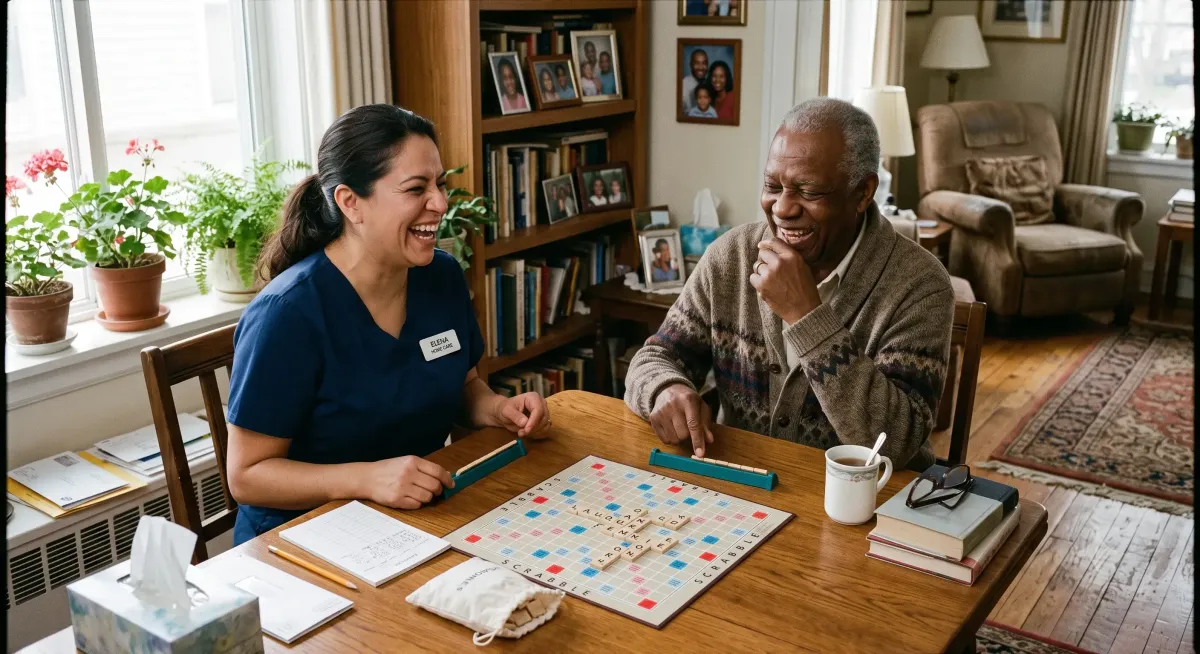
Respite Care in Hoboken for Family Caregivers | Green Park
What Is Respite Care, and How Can It Help Family Caregivers in Hoboken?
If you are caring for a parent or spouse and running on empty, respite care is the break you have been needing. Respite care in Hoboken is short-term, non-medical home care that steps in so a family caregiver can rest, work, travel, or simply recharge, while your loved one stays safe and well cared for at home. It can be a few hours, a full day, or a longer stretch. The point is simple: you get relief, and your loved one keeps the support they need without a gap.
That is the short answer. Below we explain what respite care actually involves, the signs you need it, how it works, and why taking a break is one of the best things you can do for the person you are caring for. If you want the full picture, you can also read about our respite care service.
What is respite care?
Respite care is temporary care that gives the usual family caregiver a break. Instead of the daughter, son, husband, or wife carrying every hour of care alone, a professional caregiver steps in for a set period so the family member can step away with peace of mind.
It is non-medical care. That means it covers the everyday, hands-on support your loved one relies on: help with bathing, dressing, meals, moving around safely, medication reminders, light housekeeping, and companionship. It is not nursing or therapy. Think of it as someone reliable taking your place for a while, so the care your loved one receives never pauses just because you need to rest.
Respite care is flexible by design. Some families use it for a few hours a week so the caregiver can run errands, keep appointments, or just breathe. Others use it for a full weekend, a holiday, or while they recover from their own illness or surgery. There is no single right amount. It fits around your life and your loved one's needs.
What are the signs you need respite care?
Family caregivers are often the last to admit they are struggling, because they feel they should be able to manage. But caregiving is demanding, and the strain builds quietly. These are common signs it is time to bring in respite support:
You are constantly exhausted. You are not sleeping well, and rest never seems to be enough.
You have no time for yourself. Your own appointments, friendships, and interests have fallen away.
You feel irritable or on edge. Small things set you off in a way they did not before.
Your own health is slipping. You are skipping meals, missing your own medical appointments, or feeling unwell.
You feel isolated. Caregiving has narrowed your world, and you feel alone in it.
You feel guilty for wanting a break. This one is almost universal, and it is worth saying clearly: wanting rest does not make you a bad caregiver.
If several of these sound familiar, that is not a sign you are failing. It is a sign you have been doing a great deal for a long time, and that support would help both of you.
Why taking a break helps your loved one too
Many family caregivers resist respite because it feels like handing off a responsibility that should be theirs. But rest is not a luxury in caregiving. It is what makes good care sustainable.
A caregiver who is exhausted, stretched thin, and never off duty cannot give their best, no matter how much they love the person they care for. Burnout leads to frayed patience, missed details, and eventually to the caregiver's own health breaking down, which can put the whole arrangement at risk. Stepping away to recharge means you come back steadier, more patient, and more present. That is better for your loved one, not worse.
There is a second benefit families often notice. A new, friendly caregiver brings fresh energy and company into the home. For a loved one who mostly sees the same family member every day, a warm new presence can lift the mood and add a little variety to the week.
How does respite care work?
We make it straightforward. It starts with a free consultation, where we talk through your loved one's needs, routines, and preferences, and how much of a break you are looking for. From there we arrange a caregiver to step in for the time you need, whether that is a regular few hours each week or a longer block while you are away.
We take time to learn the details that matter: how your loved one likes their day to go, what they enjoy, what to avoid, any dietary needs, and the daily routine you have built. The goal is for the care to feel seamless, so your loved one is comfortable and you can truly switch off, knowing they are in good hands.
Respite care can be one-time or ongoing. Many families start with an occasional break and then build it into a regular part of the week once they see how much it helps.
What can a respite caregiver help with?
Support is built around your loved one and your routines, but it typically includes:
Personal care. Respectful help with bathing, dressing, and grooming.
Meals. Preparing meals that suit your loved one's tastes and any dietary needs, and making sure they eat and drink well.
Medication reminders. Timely prompts so prescribed medications are taken on schedule.
Getting around safely. A steady hand with walking and moving around the home to prevent falls.
Light housekeeping. Keeping living spaces tidy and safe.
Companionship. Conversation, activities, and a friendly presence so your loved one is not only cared for but has good company while you are away.
Respite care and other kinds of support
Respite is often part of a bigger picture, and it works closely with our other care.
If you are caring for someone with memory loss, the strain can be especially heavy, and regular breaks matter even more. Our Alzheimer's and dementia care support pairs naturally with respite, so you can rest while your loved one stays with a caregiver who understands dementia.
If your loved one is recovering from a hospital or rehab stay and you have been managing that recovery yourself, respite gives you room to catch your breath during a demanding time. You can read more about that in our post-hospital and rehab care service.
And if the need grows beyond occasional breaks to steady, around-the-clock support, our 24-hour and live-in care can provide a continuous, familiar presence day and night.

How to prepare for your first respite visit
A little preparation helps the first break go smoothly, for you and your loved one. These simple steps make a big difference:
Write down the daily routine. A short note on wake times, meals, medications, favorite activities, and bedtime gives the caregiver a head start and keeps the day familiar for your loved one.
List the important details. Note any dietary needs, things your loved one enjoys, subjects that upset or calm them, and where everyday items are kept.
Do a short introduction first. If you can, have the caregiver visit for a little while before your first real break, so your loved one meets them as a friendly face rather than a stranger arriving as you leave.
Leave clear contact information. Your phone number and any other key contacts, so you can be reached easily and can relax knowing you are only a call away.
Start small if it helps. A few hours the first time can ease everyone in before you plan a longer break.
We handle this with you during the consultation and the first visit, so nothing feels rushed. Once you see how settled your loved one is, taking that time for yourself gets much easier.
Towns and Counties We Serve
We provide respite care to families in Hoboken and across New Jersey, including Jersey City, Bayonne, Weehawken, North Bergen, Union City, and the surrounding towns. Our service area covers seven counties: Hudson, Essex, Bergen, Union, Morris, Passaic, and Middlesex.
Wherever you are in the area, we can arrange respite support close to home, on a schedule that fits your life. Local, dependable care means you can step away with genuine peace of mind, knowing help is right nearby.
Frequently asked questions
What is respite care? Respite care is short-term, non-medical home care that gives the usual family caregiver a break. A professional caregiver steps in to help your loved one with daily tasks such as bathing, dressing, meals, medication reminders, and companionship, so you can rest, work, or travel while your loved one stays safely cared for at home.
How long can respite care last? It is flexible. Respite care can be a few hours, a full day, a weekend, or a longer stretch while you are away or recovering. Many families start with occasional breaks and then set up a regular schedule once they see how much it helps.
Is wanting a break a sign I am not coping? No. Wanting rest is normal and healthy. Caregiving is demanding, and no one can do it every hour without a break. Taking time to recharge helps you provide better, more patient care, which is good for your loved one too.
Can respite care become regular? Yes. Respite can be a one-time break or an ongoing part of your week. Many families build in a regular few hours so they can count on time for themselves, appointments, or rest.
Can you provide respite for someone with dementia? Yes. We can arrange respite with caregivers experienced in memory care, so you can step away while your loved one stays with someone who understands dementia and keeps their routine calm and familiar.
What areas do you serve? We serve Hoboken and families across New Jersey, including Jersey City, Bayonne, Weehawken, North Bergen, and Union City, covering Hudson, Essex, Bergen, Union, Morris, Passaic, and Middlesex counties.
How do we get started? Request a free consultation. We will talk through your loved one's needs and the kind of break you are looking for, then arrange respite support that fits, with no pressure and no obligation.
Ready for a break you can feel good about?
You have been giving a great deal to someone you love, and you deserve time to rest and look after yourself too. Respite care lets you do that without worry, knowing your loved one is safe, comfortable, and in good company at home.
Request a Free Consultation and we will help you set up the right break for your family.
